As businesses grow, decision-making becomes more complex. Companies need accurate information to manage operations efficiently, monitor performance, and respond quickly to business challenges.
However, many businesses still rely on manually generated reports, spreadsheets, and disconnected systems to track important business data.
This often leads to:
delayed reporting,
inaccurate insights,
slow decision-making,
and operational inefficiencies.
In today’s competitive market, businesses can no longer afford to make decisions using outdated information.
This is why companies across industries are increasingly investing in ERP systems like Odoo that provide real-time reporting and centralized business visibility.
What Is Real-Time Business Reporting?
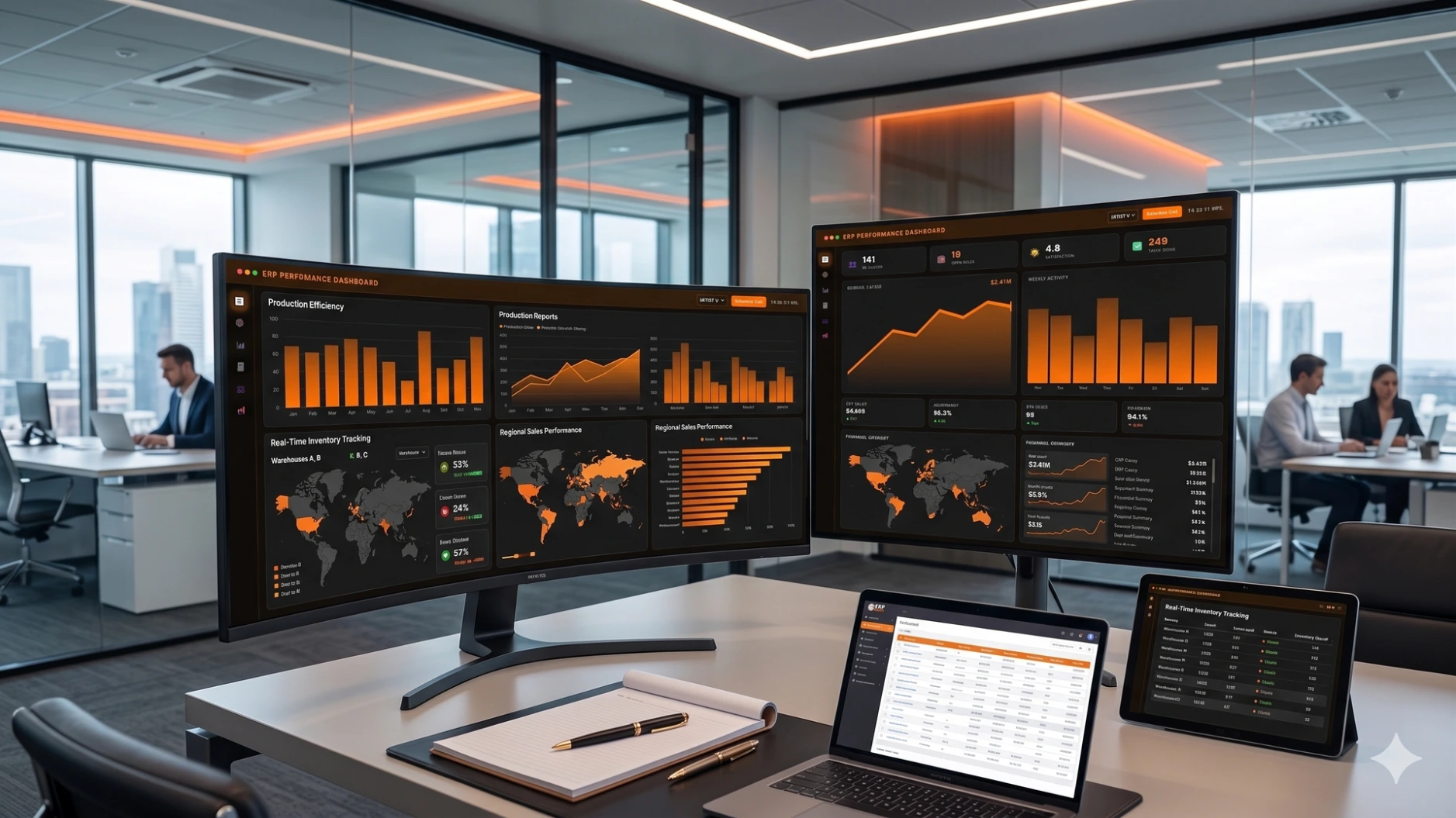
Real-time business reporting allows companies to access live operational data instantly instead of waiting for manually prepared reports.
This means businesses can monitor:
sales performance,
inventory levels,
financial reports,
customer activity,
warehouse operations,
and employee productivity
through centralized dashboards updated automatically in real time.
Instead of relying on outdated spreadsheets, management teams gain immediate visibility into business operations.
Why Traditional Reporting Creates Problems
Many growing businesses still generate reports manually using spreadsheets or disconnected software systems.
While this may work temporarily, it often creates serious operational limitations as the company grows.
1. Delayed Decision-Making
Manual reporting processes usually require employees to:
collect data from multiple systems,
prepare spreadsheets,
verify information,
and generate reports manually.
This takes valuable time and delays important business decisions.
By the time reports are ready, the information may already be outdated.
2. Inaccurate Business Data
Disconnected systems and manual data entry increase the risk of:
reporting mistakes,
duplicate records,
missing information,
and inconsistent data.
Inaccurate reports can lead to poor business decisions and operational losses.
3. Limited Operational Visibility
Without centralized reporting, management teams often struggle to understand:
current inventory status,
order performance,
financial health,
and operational bottlenecks.
This reduces the company’s ability to respond quickly to business issues.

4. Difficulty Tracking Business Performance
Growing businesses need continuous performance monitoring to improve operations.
However, manual reporting makes it difficult to track:
sales growth,
inventory movement,
employee productivity,
customer trends,
and operational efficiency
consistently and accurately.
How Real-Time Reporting Improves Business Operations
Real-time reporting helps businesses make faster and more informed decisions using live operational data.
This improves:
operational visibility,
productivity,
workflow efficiency,
and business planning.
1. Faster Decision-Making
Live dashboards allow management teams to identify issues immediately and take faster action.
For example:
low inventory levels,
delayed orders,
declining sales,
or operational bottlenecks
can be detected instantly.
This helps businesses respond before problems become larger.
2. Improved Operational Visibility
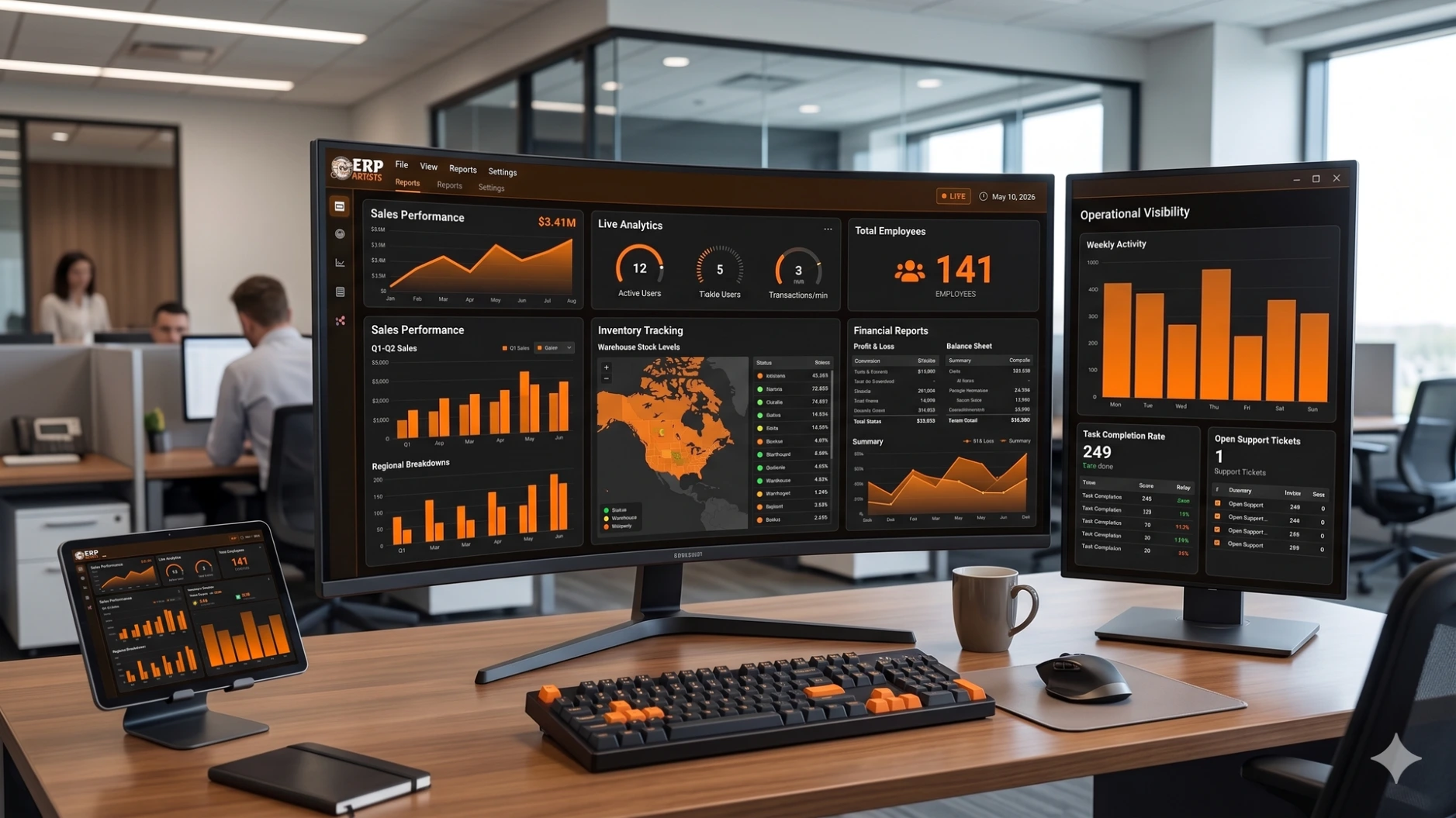
Real-time dashboards provide centralized visibility across departments.
Management can monitor:
sales,
inventory,
accounting,
purchasing,
and warehouse operations
from one connected platform.
This improves coordination and business transparency.
3. Better Business Planning
Accurate real-time data helps businesses:
forecast demand,
optimize inventory,
improve budgeting,
and plan operations more effectively.
Better planning reduces operational risks and improves scalability.
4. Increased Productivity
Employees spend less time creating manual reports and more time focusing on valuable business activities.
Automation reduces repetitive tasks while improving reporting accuracy.
How Odoo Helps Businesses with Real-Time Reporting
Odoo provides integrated real-time reporting across multiple business functions.
With Odoo, businesses can monitor:
inventory performance,
accounting reports,
CRM activities,
sales analytics,
manufacturing operations,
purchasing workflows,
and employee productivity
through centralized dashboards.
One of the biggest advantages of Odoo is that all modules are connected within one ERP system.
For example:
When a sales order is confirmed:
inventory updates automatically,
invoices synchronize instantly,
accounting records update in real time,
and dashboards reflect operational changes immediately.
This creates accurate and centralized business visibility.
Real Business Example
Imagine a wholesale distribution company managing reports manually through spreadsheets.
Management teams spend hours:
collecting sales data,
verifying inventory,
checking invoices,
and preparing reports manually.
As operations grow:
reports become delayed,
operational visibility decreases,
and decision-making slows down.
After implementing Odoo ERP:
dashboards update automatically,
inventory visibility improves,
reports generate instantly,
and management gains real-time operational insights.
This helps the business improve efficiency and respond faster to operational challenges.

Benefits of Real-Time Business Reporting
Improved Decision-Making
Businesses can respond quickly using accurate live data.
Better Operational Transparency
Management gains visibility across all departments.
Faster Reporting
Automated dashboards eliminate manual reporting delays.
Reduced Errors
Integrated systems improve reporting accuracy.
Improved Scalability
Businesses can manage growing operations more efficiently.
Why European Businesses Prioritize Real-Time Visibility
European businesses increasingly focus on:
operational transparency,
data accuracy,
workflow automation,
scalability,
and digital transformation.
Industries such as manufacturing, logistics, retail, and wholesale distribution depend heavily on accurate reporting to remain competitive.
ERP systems like Odoo help businesses centralize reporting while improving operational control and efficiency.
Signs Your Business Needs Real-Time Reporting
Your business may require ERP reporting software if you experience:
delayed reports,
inconsistent data,
operational blind spots,
slow decision-making,
disconnected systems,
or difficulty monitoring business performance.
These challenges often indicate the need for centralized real-time reporting.
Conclusion
Real-time business reporting plays a critical role in operational efficiency and business growth.
Manual reporting methods and disconnected systems often create delays, inaccuracies, and limited operational visibility.
ERP solutions like Odoo help businesses centralize reporting, automate data updates, and improve real-time visibility across departments.
Companies that invest in real-time reporting are better positioned to improve decision-making, operational efficiency, and long-term scalability.