Running a growing business is already challenging enough. But many companies still rely on manual processes, spreadsheets, disconnected software, and repetitive tasks to manage their daily operations.
At first, these methods may seem manageable. However, as the business grows, manual operations often become one of the biggest reasons for delayed growth, operational confusion, and rising costs.
Businesses across manufacturing, retail, logistics, wholesale, and eCommerce industries are now shifting toward ERP systems to automate operations and improve efficiency.

Why Manual Operations Become a Problem as Businesses Grow
Many businesses start with simple tools like Excel sheets, emails, and standalone software applications. While these tools work during the early stages, they often create major operational issues when the company begins scaling.
Some of the most common problems include:
Duplicate data entry
Inventory mismatches
Delayed reporting
Communication gaps between departments
Human errors
Lack of real-time visibility
Slow approval processes
For example, a manufacturing company may manage inventory separately from accounting and sales. This creates delays in reporting and increases the chances of stock errors.
Similarly, retail businesses using multiple systems for billing, inventory, and purchasing often struggle to maintain accurate data across departments.
The Hidden Cost of Manual Business Processes
Many companies underestimate how much manual work actually costs the business.
Manual operations usually lead to:
Reduced Productivity
Employees spend valuable time updating spreadsheets, copying information between systems, and correcting errors.
Increased Human Errors
Small mistakes in inventory, invoicing, or purchase orders can create larger operational and financial problems.
Poor Decision-Making
Without real-time reports, business owners often make decisions using outdated information.
Limited Scalability
As operations grow, managing everything manually becomes increasingly difficult
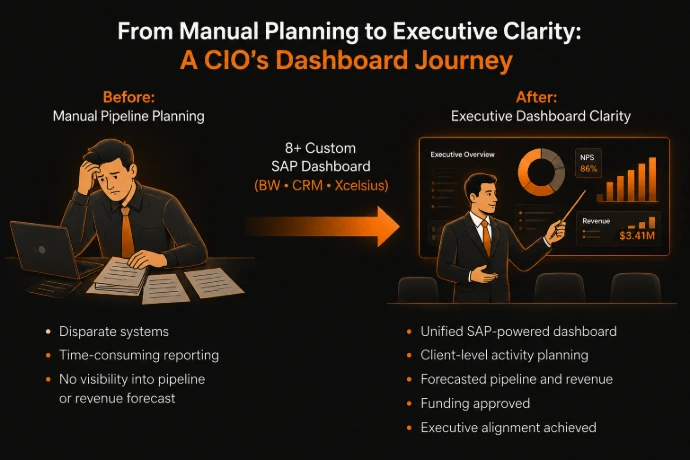
How ERP Software Helps Businesses Improve Efficiency
ERP software centralizes business operations into one integrated system. Instead of using multiple disconnected tools, businesses can manage operations from a single platform.
This helps improve:
Inventory management
Sales tracking
Accounting
Purchasing
Manufacturing
HR operations
Customer relationship management
An ERP system creates better communication between departments and provides real-time business visibility.
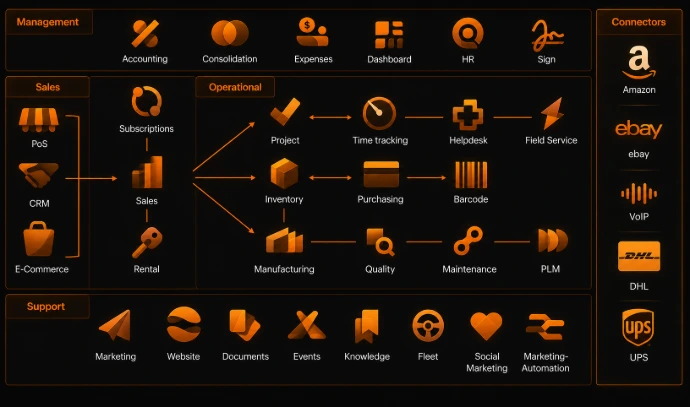
How Odoo Helps Automate Business Operations
Odoo provides an all-in-one ERP solution designed for businesses looking to improve operational efficiency and reduce manual work.
With Odoo, businesses can:
Automate repetitive tasks
Track inventory in real time
Manage accounting and invoicing
Monitor sales pipelines
Improve warehouse operations
Generate live reports and dashboards
One of the biggest advantages of Odoo is that all modules work together in a centralized system.
For example:[Text Wrapping Break]When a sales order is confirmed, inventory updates automatically, invoices are generated instantly, and management can track the entire process in real time.
Real Business Example
Imagine a wholesale distribution company managing operations manually.
The sales team tracks orders in spreadsheets, inventory is updated separately, and accounting uses another software entirely.
As order volumes increase, employees spend more time correcting mistakes than focusing on growth.
After implementing an ERP solution like Odoo:
Inventory updates automatically
Orders sync in real time
Reports become instantly available
Departments work more efficiently together
This helps the company reduce operational delays and improve customer satisfaction.
Signs Your Business Needs ERP Automation
Businesses should consider ERP implementation if they experience:
Frequent inventory errors
Delayed reporting
Too much manual data entry
Disconnected software systems
Difficulty scaling operations
Communication gaps between teams
Lack of operational visibility
These are strong indicators that manual operations are slowing business growth.
Benefits of Business Process Automation
Implementing ERP automation provides several long-term benefits:
Improved Operational Efficiency
Automation reduces repetitive manual work and improves productivity.
Better Decision-Making
Real-time dashboards provide accurate business insights.
Reduced Operational Costs
Businesses save time and reduce costly errors.
Scalable Operations
ERP systems support business growth without operational chaos.
Centralized Data Management
All departments work within one connected system.

Why Businesses in Europe Are Adopting ERP Systems
European businesses are increasingly investing in ERP solutions to improve:
operational transparency
automation
compliance
scalability
reporting accuracy
Industries such as manufacturing, logistics, wholesale distribution, and retail rely heavily on efficient workflows and accurate business data.
ERP systems like Odoo help companies remain competitive while managing growing operational complexity.
Conclusion
Manual business operations may work temporarily, but they often become a major obstacle to long-term growth.
As businesses scale, disconnected systems, repetitive tasks, and operational inefficiencies create unnecessary delays and costs.
ERP solutions like Odoo help businesses centralize operations, automate workflows, and improve efficiency across departments.
Companies that invest in business process automation are better positioned for scalable growth, improved decision-making, and long-term operational success.
Looking to automate your business operations using Odoo ERP?