As businesses grow, many companies start using different software applications to manage daily operations.
For example:
accounting may use one platform,
sales may use another,
inventory may be managed separately,
and HR operations might rely on spreadsheets or standalone tools.
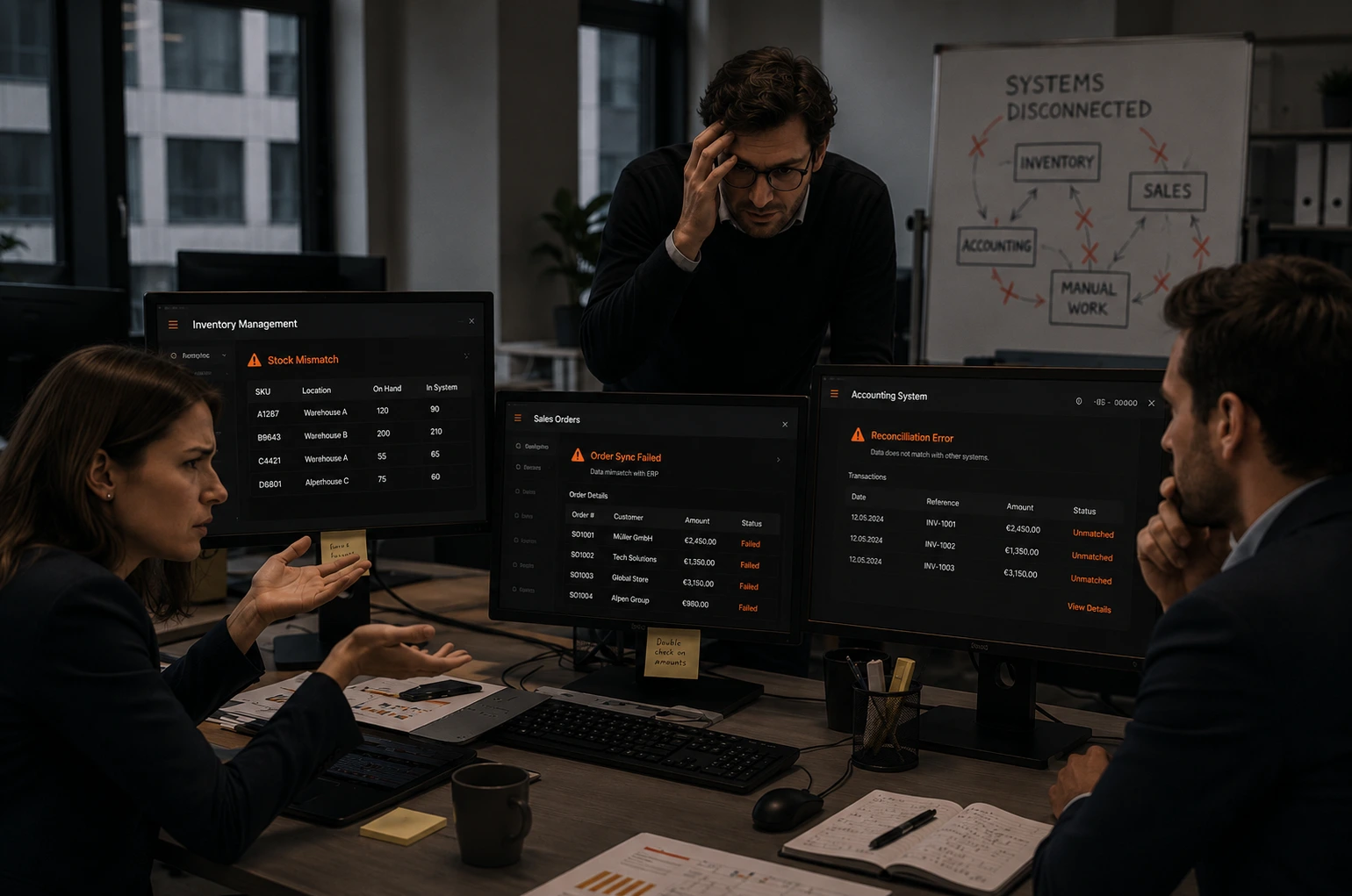
Initially, this setup may appear manageable. But over time, disconnected software systems often create operational inefficiencies, communication gaps, and hidden business costs.
This is one of the main reasons why growing businesses are increasingly adopting centralized ERP systems like Odoo.
Why Businesses Use Multiple Software Systems
Many businesses gradually add software tools as operations expand.
For example:
accounting software for finance,
CRM for sales,
inventory software for warehouse operations,
HR tools for employee management,
and separate reporting systems.
At first, these tools solve individual departmental needs.
However, when systems are not connected, businesses often experience:
duplicate work,
inconsistent data,
reporting delays,
and operational inefficiencies.
The Biggest Problems with Disconnected Software
As operations grow, managing multiple systems becomes increasingly difficult.
1. Duplicate Data Entry
One of the most common operational issues is entering the same information into multiple systems.
For example:
customer details entered into CRM,
inventory updated separately,
invoices generated manually in accounting software.
This wastes employee time and increases the chances of human errors.
2. Lack of Real-Time Visibility
Disconnected systems prevent businesses from accessing centralized real-time information.
Management teams often struggle to answer important questions such as:
What is the current stock level?
Which orders are delayed?
What is the live sales performance?
Are invoices cleared?
Without integrated systems, reports are often delayed or inaccurate.

3. Communication Gaps Between Departments
When departments work in separate systems, collaboration becomes difficult.
For example:
sales teams may confirm orders before inventory is updated,
accounting may not receive accurate sales data,
warehouse teams may lack real-time delivery information.
These communication gaps create operational delays and customer dissatisfaction.
4. Increased Operational Costs
Using multiple systems often increases business expenses through:
multiple software subscriptions,
higher maintenance costs,
employee training,
manual coordination,
and operational inefficiencies.
Businesses may spend more money managing software complexity instead of improving productivity.
5. Slower Decision-Making
Modern businesses require fast and accurate decisions.
However, disconnected systems often force management teams to:
gather reports manually,
combine data from different platforms,
verify information repeatedly.
This slows business decisions and limits operational agility.
How Centralized ERP Systems Solve These Problems
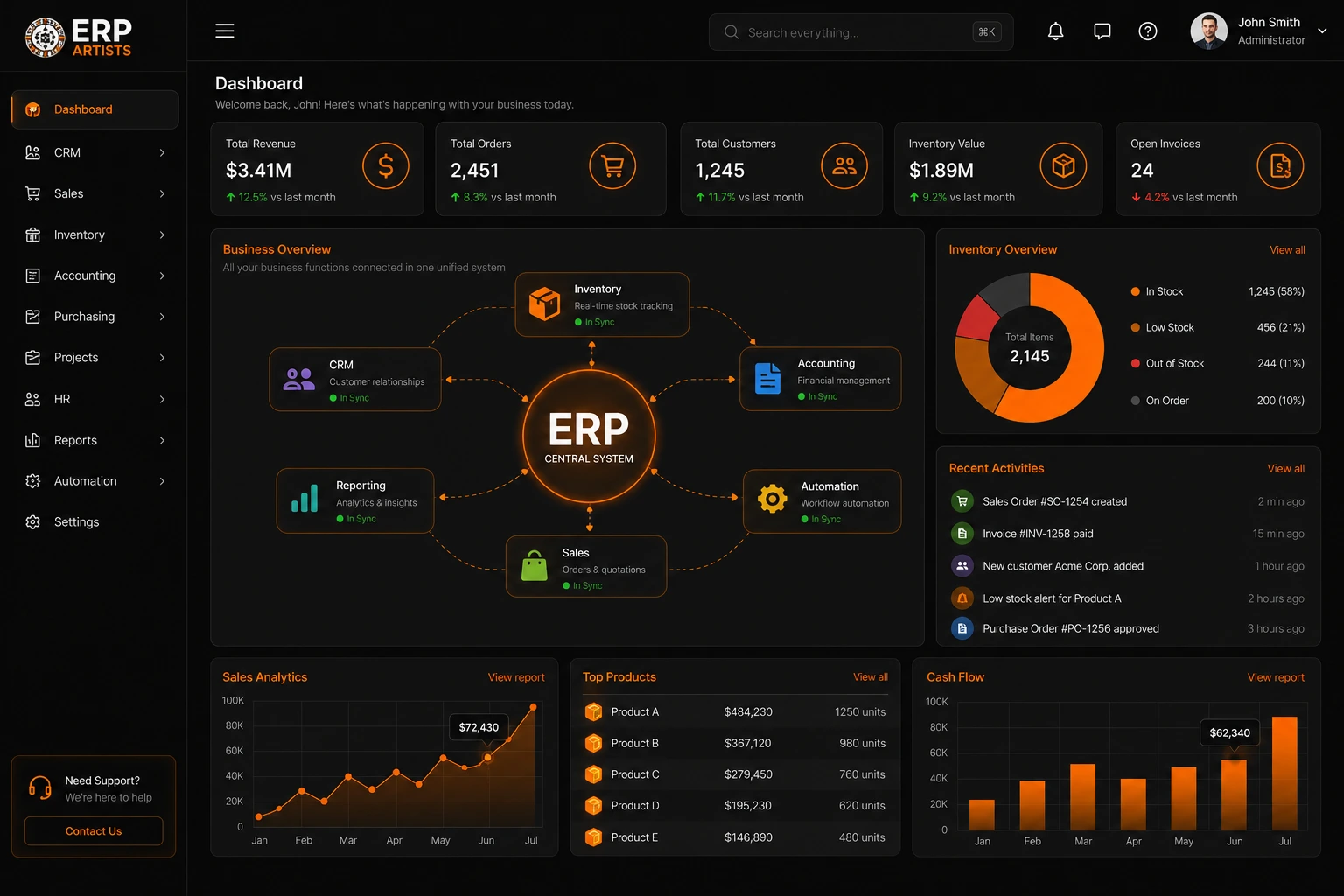
A centralized ERP system connects all business operations into one integrated platform.
Instead of using separate tools for:
inventory,
accounting,
sales,
HR,
purchasing,
manufacturing,
and reporting,
businesses can manage everything within a single system.
This improves:
operational visibility,
collaboration,
workflow automation,
and reporting accuracy.
How Odoo Helps Businesses Centralize Operations
Odoo provides an all-in-one ERP platform designed to help businesses streamline operations and reduce software complexity.
With Odoo, businesses can integrate:
CRM
sales
inventory
accounting
HR
manufacturing
purchasing
project management
eCommerce operations
into one centralized system.
This allows departments to work together more efficiently while improving real-time visibility across the business.
For example:
When a sales order is confirmed:
inventory updates automatically,
invoices are generated instantly,
accounting records synchronize,
and management can monitor operations in real time.
Real Business Example
Imagine a retail company using:
one software for billing,
another for inventory,
spreadsheets for reporting,
and separate accounting tools.
As operations grow:
stock updates become delayed,
reports become inconsistent,
employees duplicate tasks,
and management loses operational visibility.
After implementing Odoo ERP:
operations become centralized,
data updates automatically,
departments collaborate more efficiently,
and reporting becomes real time.
This helps improve operational efficiency while reducing administrative workload.
Benefits of Using a Centralized ERP System
Improved Efficiency
Employees spend less time switching between systems and managing manual updates.
Better Collaboration
Departments work with shared real-time information.
Reduced Human Errors
Automation minimizes duplicate entries and reporting mistakes.
Faster Reporting
Businesses gain instant access to operational insights.
Scalable Operations
ERP systems support long-term growth more effectively than disconnected software.
Why European Businesses Prefer Integrated ERP Systems
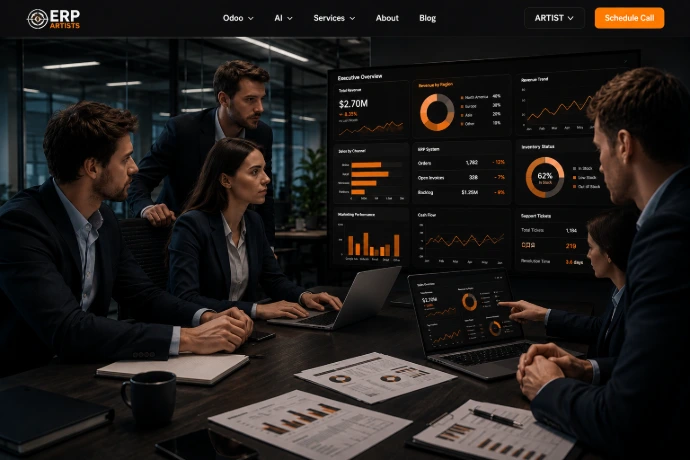
European businesses increasingly focus on:
operational transparency,
workflow automation,
centralized reporting,
scalability,
and process optimization.
Industries such as manufacturing, logistics, retail, and wholesale distribution require accurate real-time coordination between departments.
Integrated ERP systems like Odoo help businesses simplify operations while improving productivity and decision-making.
Signs Your Business Needs a Centralized ERP System
Your business may benefit from ERP implementation if you experience:
disconnected software systems,
duplicate data entry,
delayed reporting,
operational confusion,
communication gaps,
inventory mismatches,
or increasing administrative workload.
These challenges often indicate that current systems are limiting operational efficiency.
Conclusion
Using multiple disconnected software systems may work temporarily, but it often creates operational inefficiencies, communication gaps, and hidden costs as businesses grow.
Manual coordination between separate tools slows productivity and reduces operational visibility.
Centralized ERP solutions like Odoo help businesses integrate operations, automate workflows, and improve collaboration across departments.
Companies that centralize business operations are better positioned for scalable growth, faster decision-making, and long-term operational success.