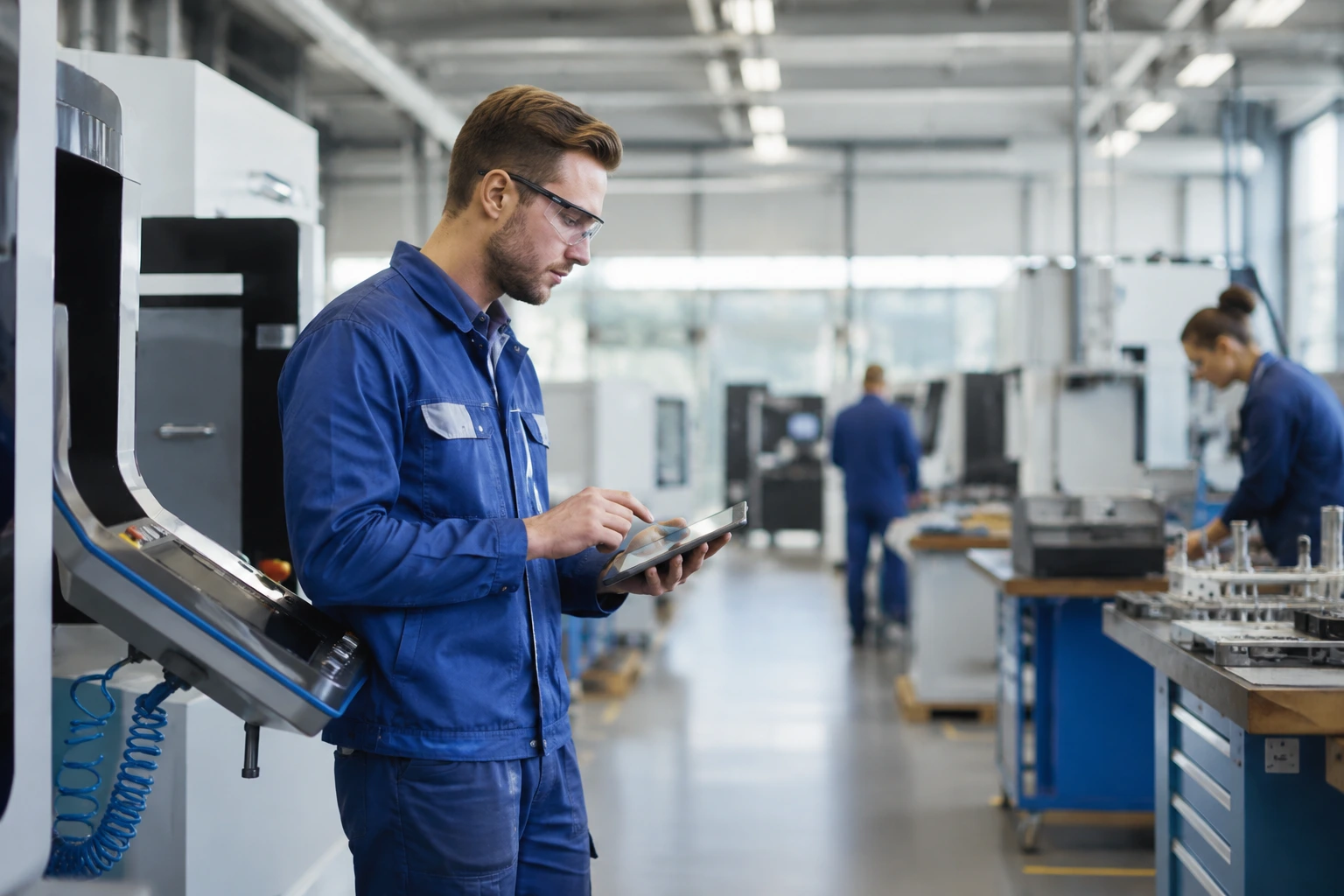
I’ve spoken with quite a few manufacturing directors across Germany, France, the Netherlands, and Italy over the past year. The conversation is almost always the same: they’re tired of complex, expensive legacy systems and want something that actually works for their day-to-day reality.
And more of them are choosing Odoo.
It’s no longer just small workshops making the move. Mid-sized manufacturers — especially in automotive parts, machinery, furniture, and food processing — are switching to Odoo in 2026. Here’s why it’s happening, and what it actually looks like on the factory floor.
The Pressure European Manufacturers Are Feeling Right Now
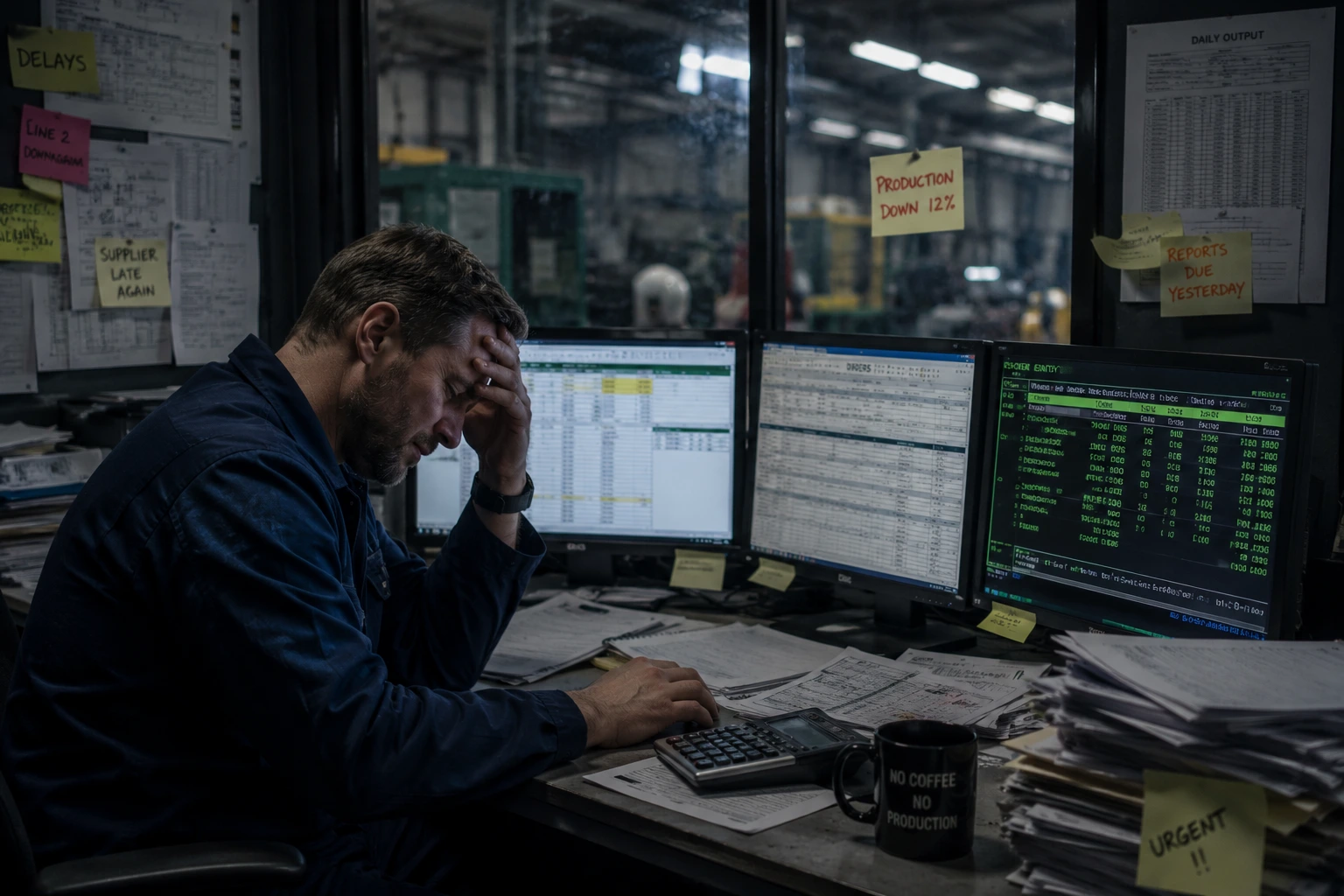
European manufacturing is facing real challenges in 2026:
- Rising energy and material costs
- Strict ESG and sustainability reporting requirements
- Supply chain disruptions and the need for better visibility
- Shortage of skilled workers
- Demand for faster customization and shorter lead times
Traditional ERPs like SAP often feel too rigid and expensive for these realities. Many companies are discovering that Odoo gives them the flexibility they need at a fraction of the cost and complexity.
Real Stories from European Manufacturers
Case 1: German Automotive Parts Manufacturer (Bavaria)
A mid-sized company with 120 employees was struggling with their old ERP. Production planning took days, and they frequently had stock mismatches. After switching to Odoo 19, they now run real-time MRP with predictive alerts. Result?
→ 28% reduction in excess inventory
→ Shop floor operators update work orders directly on tablets
→ Planning time cut from 3 days to a few hours
The operations manager told us: “We didn’t want another complicated system. We wanted something our team would actually use.”
Case 2: French Furniture Producer (Rhône-Alpes)
This company makes custom and batch furniture for the European market. They needed better integration between sales orders, production, and inventory. After moving to Odoo:
- Automated BOM updates when designs change
- Real-time visibility for customers on order status
- Quality checks built directly into the production flow
They reported saving nearly 15 hours per week in manual coordination.
Case 3: Dutch Food Processing Company
Facing strict traceability requirements, they chose Odoo for its lot tracking and quality management. The system now automatically flags issues and supports full EU compliance reporting with minimal effort.
What Makes Odoo 19 So Attractive for Manufacturers?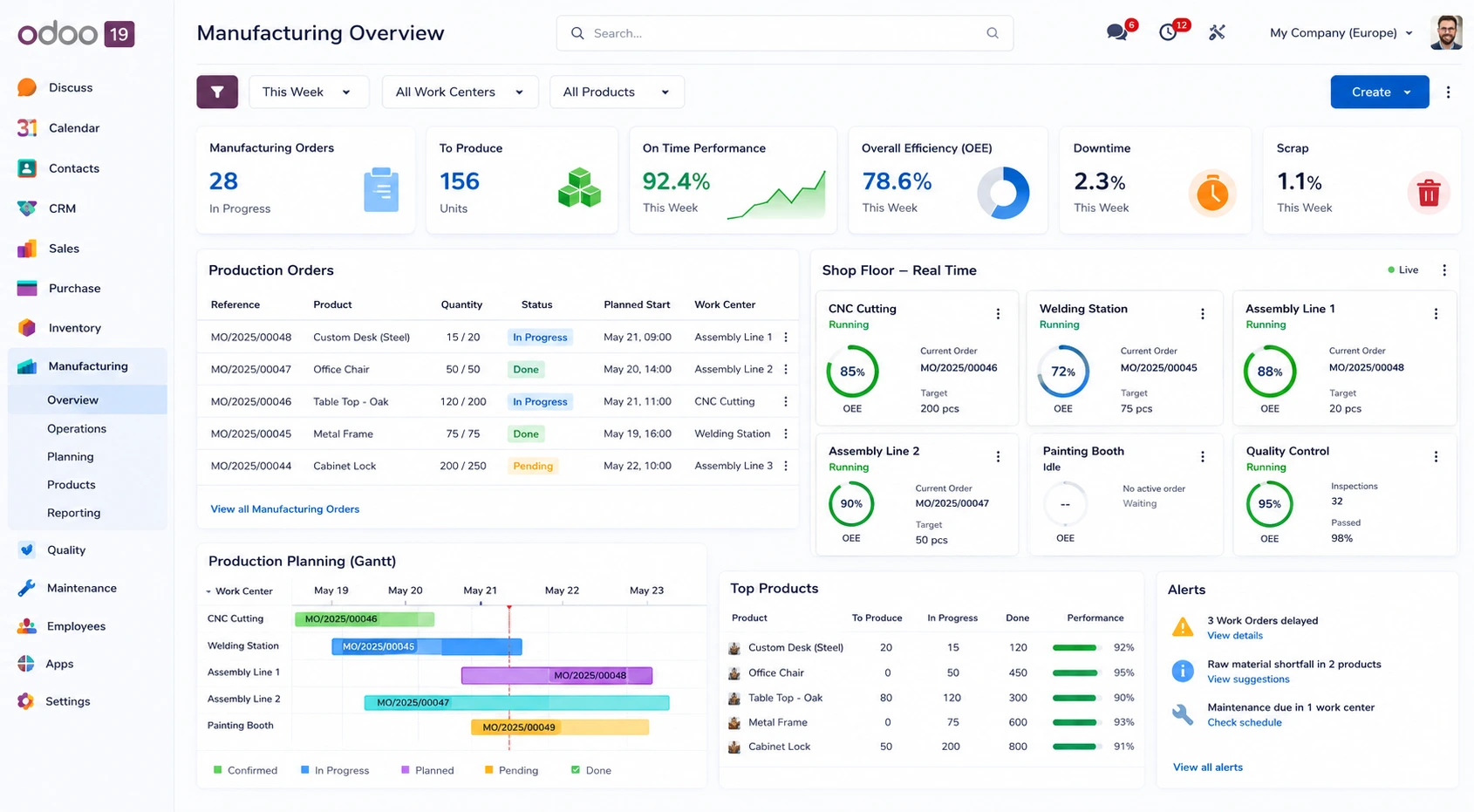
Here are the features that are actually driving switches in Europe right now:
1. Smarter Production Planning & MRP
Odoo 19 brings improved Gantt scheduling, drag-and-drop work order management, and better multi-level BOM handling. Manufacturers can adjust production on the fly without breaking the entire plan.
2. Shop Floor Experience
The redesigned Shop Floor app is tablet-friendly. Operators see clear instructions, scan barcodes, log time, and report quality issues in one screen. No more paper sheets or complicated interfaces.
3. Predictive Inventory & AI Features
The system now suggests reorder points based on real production data and sales trends. Many companies are reducing stock-outs while lowering overall inventory value.
4. Cost Advantage
Compared to SAP or Dynamics, Odoo is significantly more affordable. You only pay for what you use, and implementation is usually much faster (often 3–6 months instead of 12+).
5. Flexibility for European Needs
- Strong multi-currency and multi-company support
- Built-in tools for sustainability tracking
- Easy customization for industry-specific processes
- Good integration with European accounting standards
Before vs After: Typical Results We’re Seeing
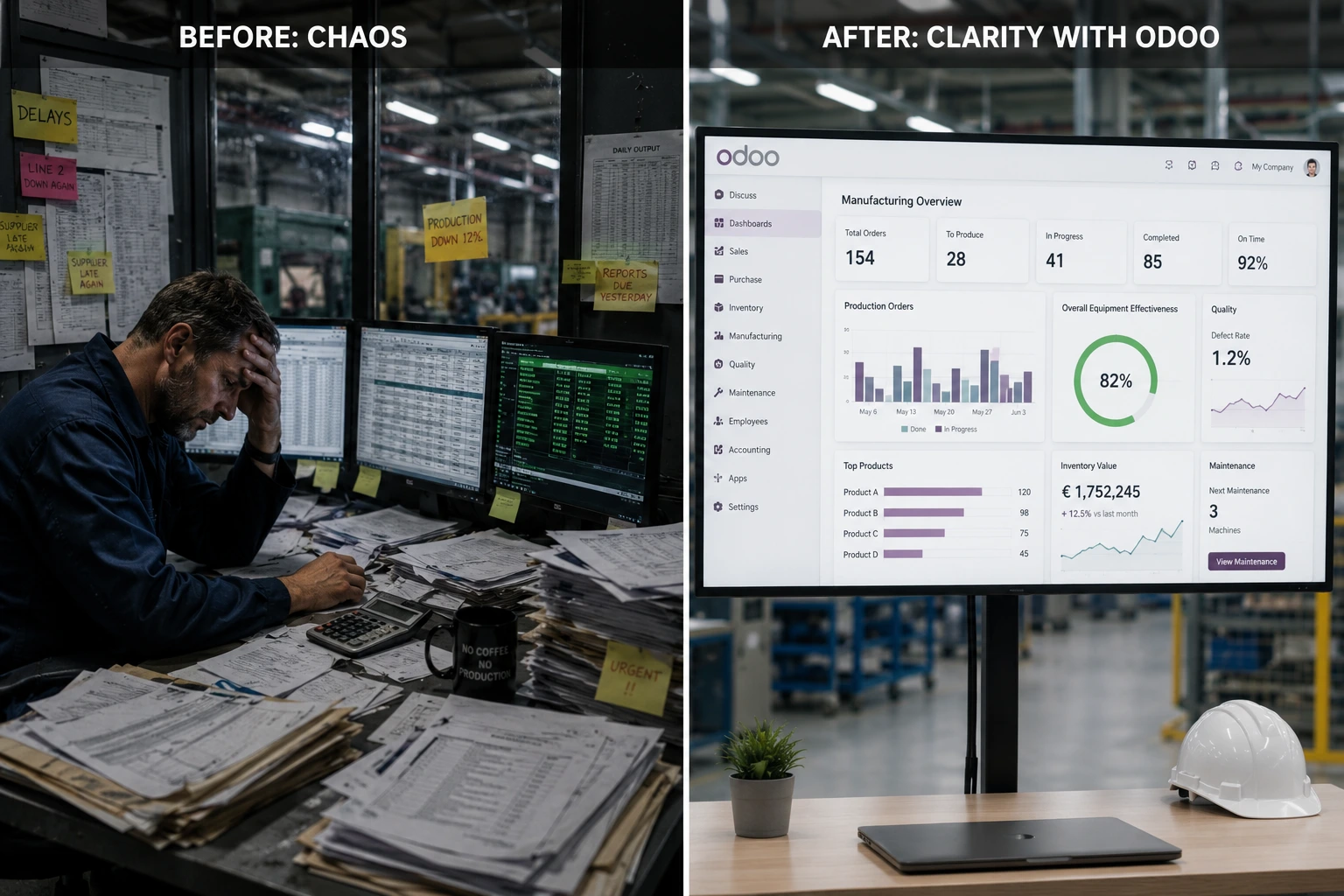
| Area | Traditional ERP | With Odoo 19 |
|---|---|---|
| Production Planning | Days of manual work | Hours with real-time adjustments |
| Inventory Accuracy | Frequent mismatches | 95%+ with real-time tracking |
| Implementation Time | 9–18 months | 3–8 months |
| Annual Software Cost | Very High | 40-70% lower |
| User Adoption | Low (complex interface) | High (modern, intuitive) |
| Traceability & Compliance | Manual reporting | Automated EU-compliant reports |
Is Odoo Right for Your Manufacturing Business?
You’re probably a good fit if:
- You have 20–500 employees
- You need better integration between sales, production, and finance
- You want to reduce reliance on spreadsheets
- You value flexibility and reasonable costs
- Your team is open to modern tools
It might not be the best choice if you need extremely complex enterprise-level processes that only a full SAP S/4HANA can handle (though even then, many are finding Odoo sufficient with good customization).
Final Thoughts
The shift we’re seeing in 2026 isn’t about chasing the newest technology. It’s about manufacturers wanting practical, usable systems that help them stay competitive in a tough European market.
Odoo isn’t perfect for every giant corporation, but for many mid-sized manufacturers, it’s proving to be the right balance of power, simplicity, and cost.
If you’re running a manufacturing business in Europe and feeling stuck with outdated systems, it might be worth exploring what Odoo 19 can do for you.