For many businesses, Excel spreadsheets are the starting point for managing operations. They are simple, affordable, and easy to use during the early stages of growth.
However, as businesses expand, relying heavily on spreadsheets often creates operational bottlenecks, data inconsistencies, and time-consuming manual work.
What once worked for a small team can quickly become difficult to manage across multiple departments, locations, and workflows.
This is why many growing businesses eventually transition from Excel-based operations to ERP systems like Odoo. 
Why Businesses Initially Rely on Excel
Excel is widely used because it is:
easy to access
flexible
low-cost
familiar to employees
Businesses often use spreadsheets for:
inventory tracking
sales reports
customer data
accounting records
employee management
purchase tracking
During the early stages, this setup may appear manageable.
But as operations grow, spreadsheets begin creating more problems than solutions.
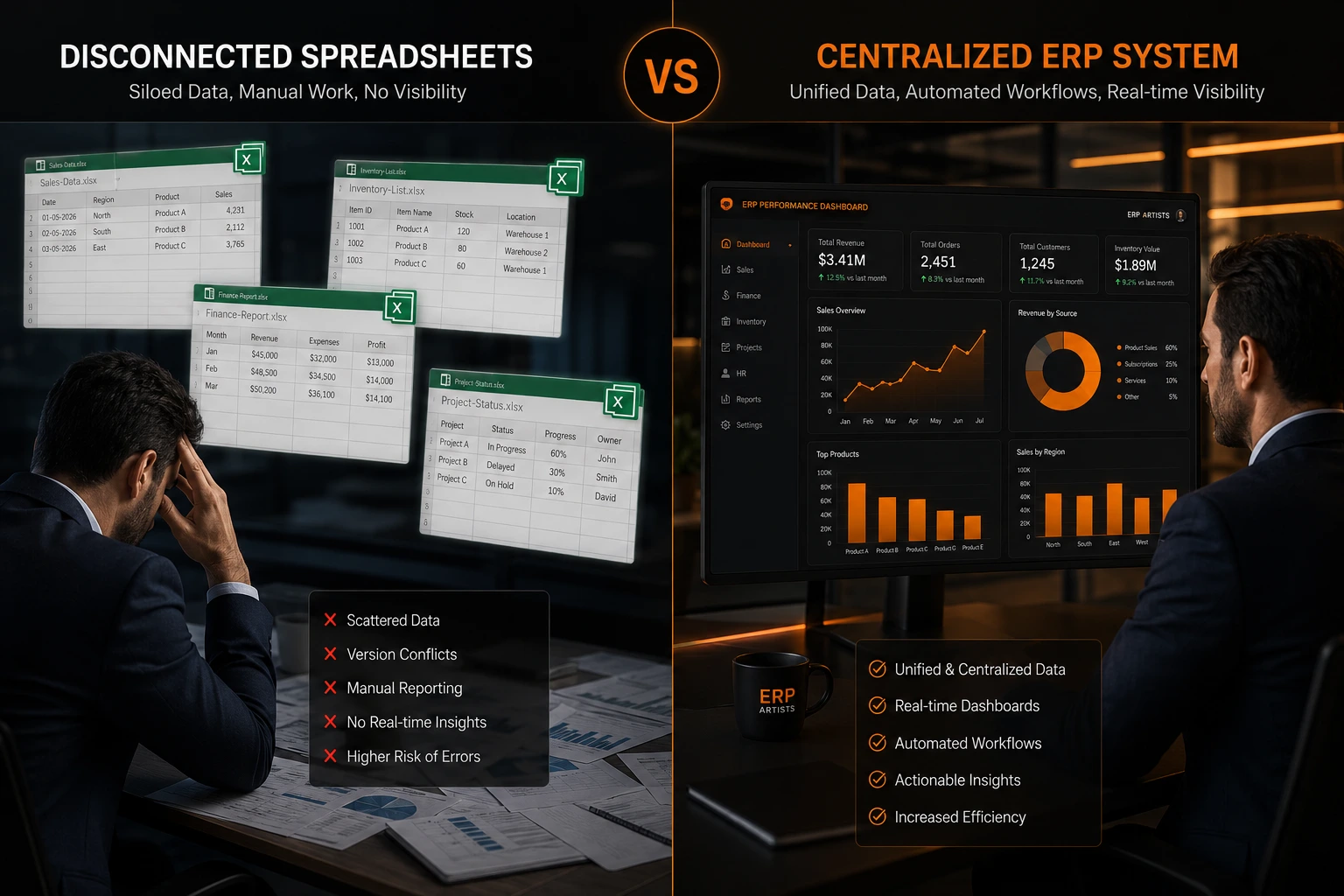
Common Problems Businesses Face with Excel Management
As the volume of operations increases, manual spreadsheet management becomes difficult to control.
Some of the most common issues include:
Data Duplication
Different departments maintain separate spreadsheets, causing inconsistent information across the business.
Human Errors
Manual entries increase the risk of incorrect calculations, missing records, and reporting mistakes.
Lack of Real-Time Visibility
Teams often work with outdated files, making it difficult to track live business operations.
Poor Collaboration
Multiple employees editing spreadsheets simultaneously can create confusion and data conflicts.
Limited Scalability
Managing growing inventory, customers, and operations manually becomes inefficient over time.
Signs Your Business Has Outgrown Excel
Many businesses continue using spreadsheets long after they stop being efficient.
Here are some major indicators that your company may need an ERP system.
1. Employees Spend Too Much Time Updating Data
If your teams spend hours manually entering information into spreadsheets, operational efficiency decreases significantly.
Instead of focusing on growth and strategy, employees spend valuable time:
copying data
correcting mistakes
updating reports
searching for files
This slows productivity across the business.
2. Departments Use Different Systems
One of the biggest operational challenges occurs when:
sales uses spreadsheets,
accounting uses separate software,
inventory is tracked manually,
and management lacks centralized visibility.
Disconnected systems create communication gaps and operational delays.
ERP systems solve this by connecting all departments into one platform.
3. Inventory Errors Are Becoming Frequent
Inventory mismatches are a major sign that manual tracking is no longer sustainable.
Common issues include:
stock discrepancies
delayed stock updates
overselling products
inaccurate warehouse reports
For businesses in retail, manufacturing, and wholesale distribution, these problems directly impact customer satisfaction and revenue.

4. Reporting Takes Too Long
Business decisions require accurate and real-time information.
However, spreadsheet-based reporting often involves:
collecting data from multiple files
manual calculations
delayed reporting cycles
This makes decision-making slower and less reliable.
Modern ERP systems provide live dashboards and automated reporting in real time.
5. Business Growth Feels Harder to Manage
Growth should improve business opportunities, not create operational chaos.
If your company experiences:
process confusion
delayed communication
operational bottlenecks
increasing administrative workload
it may indicate that manual management methods are limiting scalability.
How ERP Software Solves These Challenges
ERP systems centralize all business operations into one connected platform.
Instead of managing multiple spreadsheets and disconnected tools, businesses can automate:
inventory management
accounting
CRM
purchasing
manufacturing
HR operations
reporting
This improves operational efficiency while reducing manual work.
How Odoo Helps Businesses Move Beyond Excel
Odoo provides an integrated ERP solution designed for growing businesses looking to streamline operations and improve productivity.
With Odoo, businesses can:
automate repetitive tasks
track inventory in real time
generate instant reports
manage customer relationships
centralize business data
improve collaboration between departments
Unlike spreadsheets, Odoo allows all departments to work within one connected system.
For example:[Text Wrapping Break]When a sales order is confirmed, inventory updates automatically, invoices are generated instantly, and management can monitor the entire process in real time. 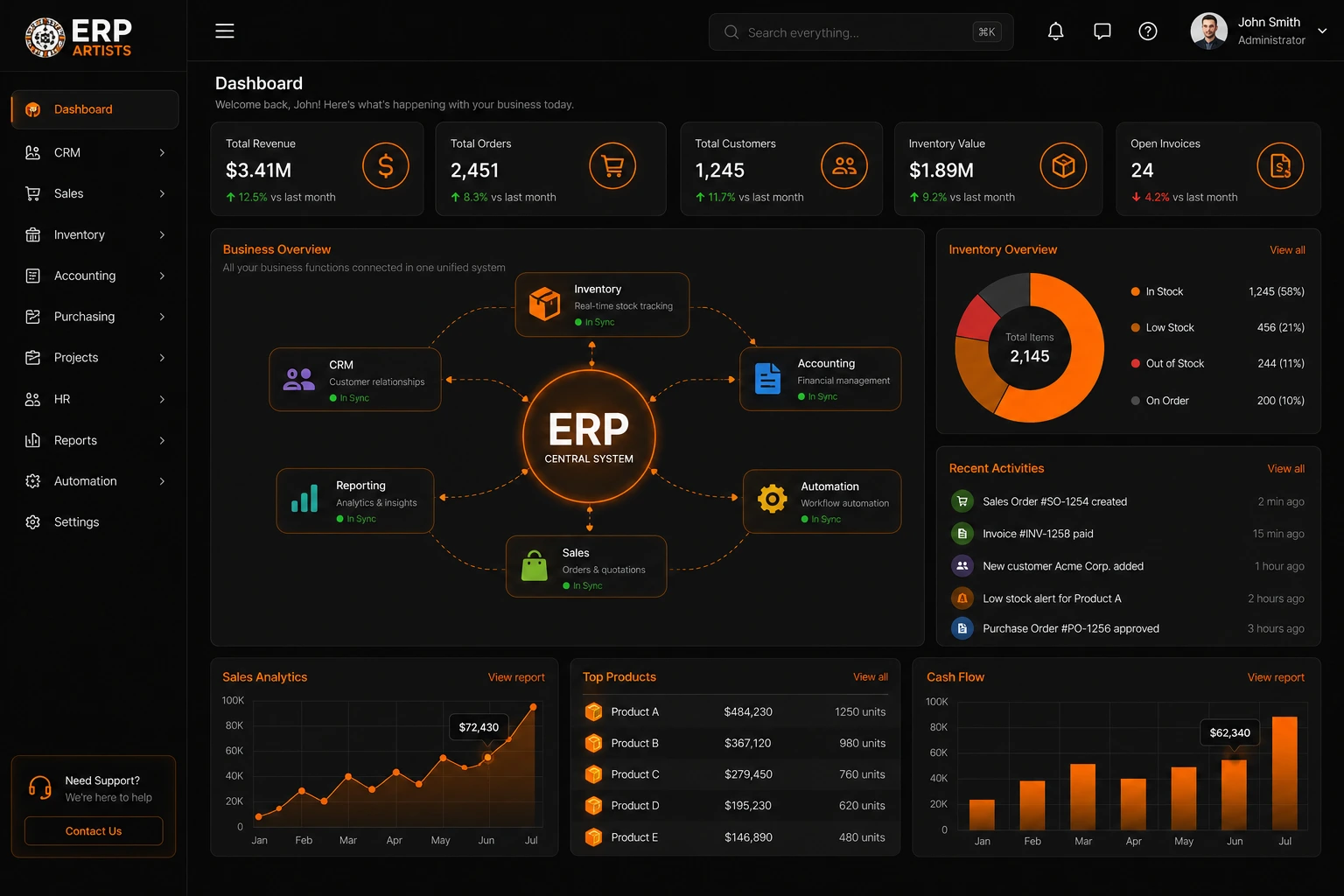
Real Business Example
Imagine a wholesale business managing orders and inventory through spreadsheets.
As customer demand increases:
stock updates become delayed,
reports take longer,
employees duplicate data manually,
and operational mistakes increase.
After implementing an ERP system like Odoo:
inventory becomes automated,
reports are generated instantly,
departments collaborate more efficiently,
and operations become scalable.
This helps the company improve productivity while reducing operational stress.
Benefits of Replacing Excel with ERP Software
Improved Accuracy
Automation reduces manual data entry and minimizes human errors.
Better Operational Visibility
Real-time dashboards provide clear business insights.
Faster Reporting
Businesses can generate reports instantly.
Centralized Operations
All departments work from one integrated platform.

Why European Businesses Are Adopting ERP Systems
European businesses increasingly prioritize:
operational efficiency
automation
scalability
data accuracy
compliance
As businesses grow, spreadsheet-based management becomes difficult to maintain efficiently.
ERP systems like Odoo help companies centralize operations and improve business workflows while supporting long-term growth.
Conclusion
Excel spreadsheets can support businesses during the early stages, but they often become inefficient as operations expand.
Manual processes, disconnected data, and operational delays can limit productivity and slow business growth.
ERP systems like Odoo help businesses automate workflows, centralize operations, and improve efficiency across departments.
Companies that transition from spreadsheet-based management to ERP systems are better prepared for scalable and sustainable growth.